
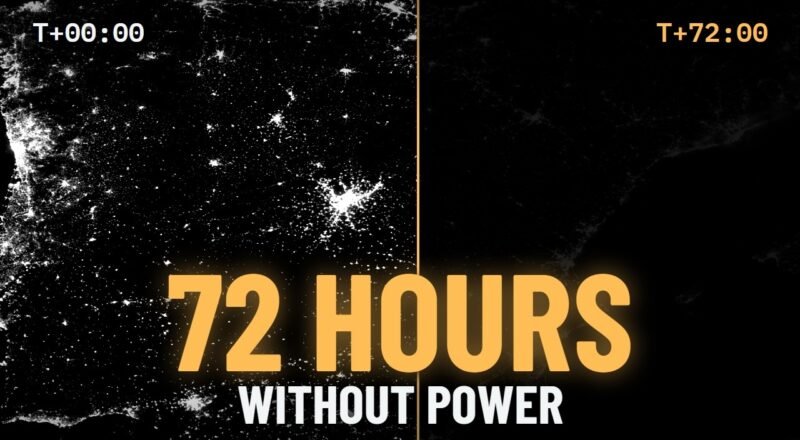
When the power goes out, modern life grinds to a halt quickly. Governments across the EU, Canada, and the UK now advise households to be prepared to manage for 72 hours without electricity — not because that guarantees help will arrive, but because three days is a practical window for self-reliance while emergency services triage the most vulnerable.
What happens in the first few hours?
At hour zero, many immediate services stop: traffic lights, elevators, electric trains and card terminals all fail. Initially phones may still have signal, but the infrastructure supporting them is fragile. Most Wi‑Fi routers and household internet go offline instantly, and ATMs and card readers become unusable without power.
Batteries and refrigeration: the 4–12 hour window
Cell towers often run on batteries for only a few hours before going silent unless they have generators. Refrigeration is another short‑term limit: a closed refrigerator keeps food safe for about four hours; beyond that, perishables like meat and dairy become risky. By hour 12, water supply can be compromised as pumping stations and treatment plants lose power or exhaust backup fuel, increasing the risk of boil-water orders.
Day one to day two: fuel, phones and restarting the grid
Within 24 hours phones start to die and fuel pumps at gas stations stop working even if tanks are full. Restoring a national grid is complex: a full restart (a “black start”) must be done power station by power station and can take many hours. By 48 hours, freezers begin to thaw and critical sites relying on generators need diesel resupply — which itself depends on functioning logistics and fuel availability.
Why 72 hours is the recommended minimum
Seventy‑two hours is a policy threshold used by several governments because it balances practical household preparedness with the realities of emergency response. It’s a minimum — not a guarantee that services will be restored in that time. The idea is simple: if most households can cover the basic needs for three days, responders can concentrate limited resources on those who cannot.
What to have on hand for 72 hours
- At least three days of water and nonperishable food that needs no cooking
- Necessary medications and basic first aid supplies
- Some cash (card machines may be inoperable)
- Flashlight, spare batteries, and a battery‑powered or wind‑up radio
- A plan for family members with special needs
Preparing for 72 hours doesn’t require exotic gear — just a small, practical kit and a basic plan. With storms, cyber risks and changing demand patterns putting new strains on grids, short‑term household resilience helps keep communities safer while professionals work to restore services.


