If artificial intelligence keeps advancing at its current pace, it’s not hard to imagine a future where most traditional jobs disappear. Automation handles production, logistics, design, even creative work. In that world, value shifts away from labor and toward something far more limited: human attention.
Attention becomes the scarce resource.
We already see early signs of this shift. Social media rewards visibility. Influencers monetize their lives. Brands compete not just for customers, but for seconds of focus. Now take that trend to its logical extreme: what if your physical presence itself becomes ad space?
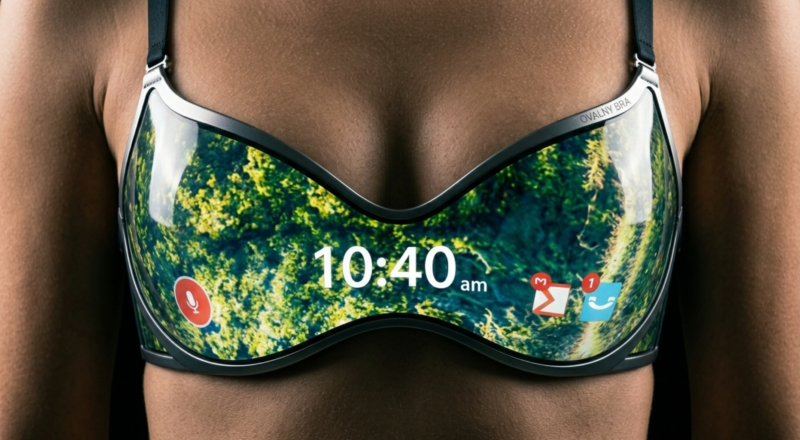
Enter the idea of wearable displays—LCD panels embedded in clothing, accessories, or even directly on the body. Instead of static fashion, your outfit becomes dynamic, programmable, and monetizable. You could sell your daily commute, your gym session, your walk through downtown as advertising inventory. The more foot traffic you encounter, the more valuable you become.
In this model, employment doesn’t disappear—it mutates. Your job isn’t what you produce, but how much attention you can carry through the world.
It’s not entirely far-fetched. We already have digital billboards, targeted ads, and wearable tech. The missing piece is economic pressure: if AI reduces the need for human labor drastically, people will look for alternative ways to generate income. Renting out your body as ad space could become normalized, even gamified—higher-paying routes, premium neighborhoods, optimized “attention paths.”
But there’s a darker layer to consider. When your body becomes a platform, where does identity end and advertising begin? Do you still choose what you wear, or does the highest bidder decide? Does public space become saturated not just with screens, but with people-as-screens?
This idea sits at the uncomfortable intersection of technology, economics, and human dignity. It feels absurd—until you realize how many once-absurd ideas have already become reality.
If the future really is driven by attention, then the question isn’t just can we become walking ads.
It’s whether we’ll have any better option.