Norway is constructing an unprecedented subsea road link that will push tunnelling to new extremes. The Rogaland fixed link — Rogfast — will run beneath Boknafjord and create a continuous road connection that removes ferries from a vital coastal route. The project combines record-breaking length and depth with highly specialised excavation and ventilation works.
Why build under the fjord?
The E39 coastal route is essential for commerce and everyday life, but it currently relies on multiple ferries, narrow roads and fragile tunnels. Rogfast will replace a sequence of tunnels, bridges and ferry crossings with a twin-bore subsea tunnel that improves reliability for freight and passenger traffic in one of Norway’s busiest maritime corridors.
Scale and records
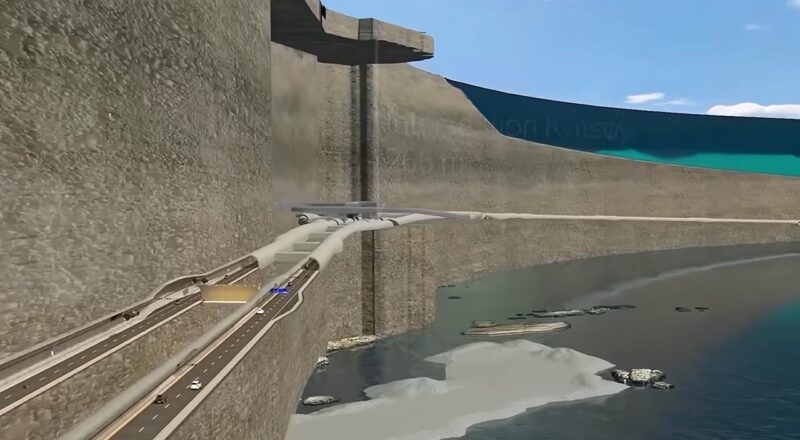
Rogfast will be about 26.7 kilometres long with a deepest point roughly 388 metres below sea level, making it the longest and deepest subsea road tunnel in the world. Construction proceeds simultaneously from multiple sites, including complex interchange works beneath the island of Kvitsøy.
Tunnelling method and geology
Rather than using a tunnel-boring machine, teams use Norway’s drill-and-blast approach (the Norwegian Tunnelling Method). The route crosses several distinct rock bands and fault zones that hold pressurised water and unpredictable ground conditions, so flexible, incremental excavation is preferred to a continuous TBM operation.
Key technical features
- Drill jumbo machines create borehole grids for controlled blasting and allow fast responses to changing ground.
- Advanced grouting systems inject microcement at high pressure to seal water-bearing fractures before blasting.
- Extensive rock support: shotcrete, rock bolts and custom concrete lining panels (around 60,000 panels planned).
- Ventilation infrastructure including two large shafts on Kvitsøy, 245 jet fans, and surface ventilation towers to maintain air quality in the long deep tunnel.
- A multi-level subsea interchange beneath Kvitsøy links the twin bores, slip roads and roundabouts — an underground “spaghetti” of tunnels and access routes.
Construction logistics and community benefits
Works involve multiple faces, mobile workshops that advance with the tunnel, and long electrical supply lines to power electrified plant underground. Local consultation influenced alignment choices and Kvitsøy gains direct road links plus new reclaimed land from tunnel rock — benefits shared with the national transport aims.
Rogfast illustrates how modern megaprojects reconcile extreme engineering with delicate geology and community needs. By combining proven Norwegian tunnelling practices, sophisticated water-sealing technology and large-scale ventilation and interchange design, the project is setting new technical benchmarks for subsea road infrastructure.